
LED light lines in stretch ceilings: trend and floating effect
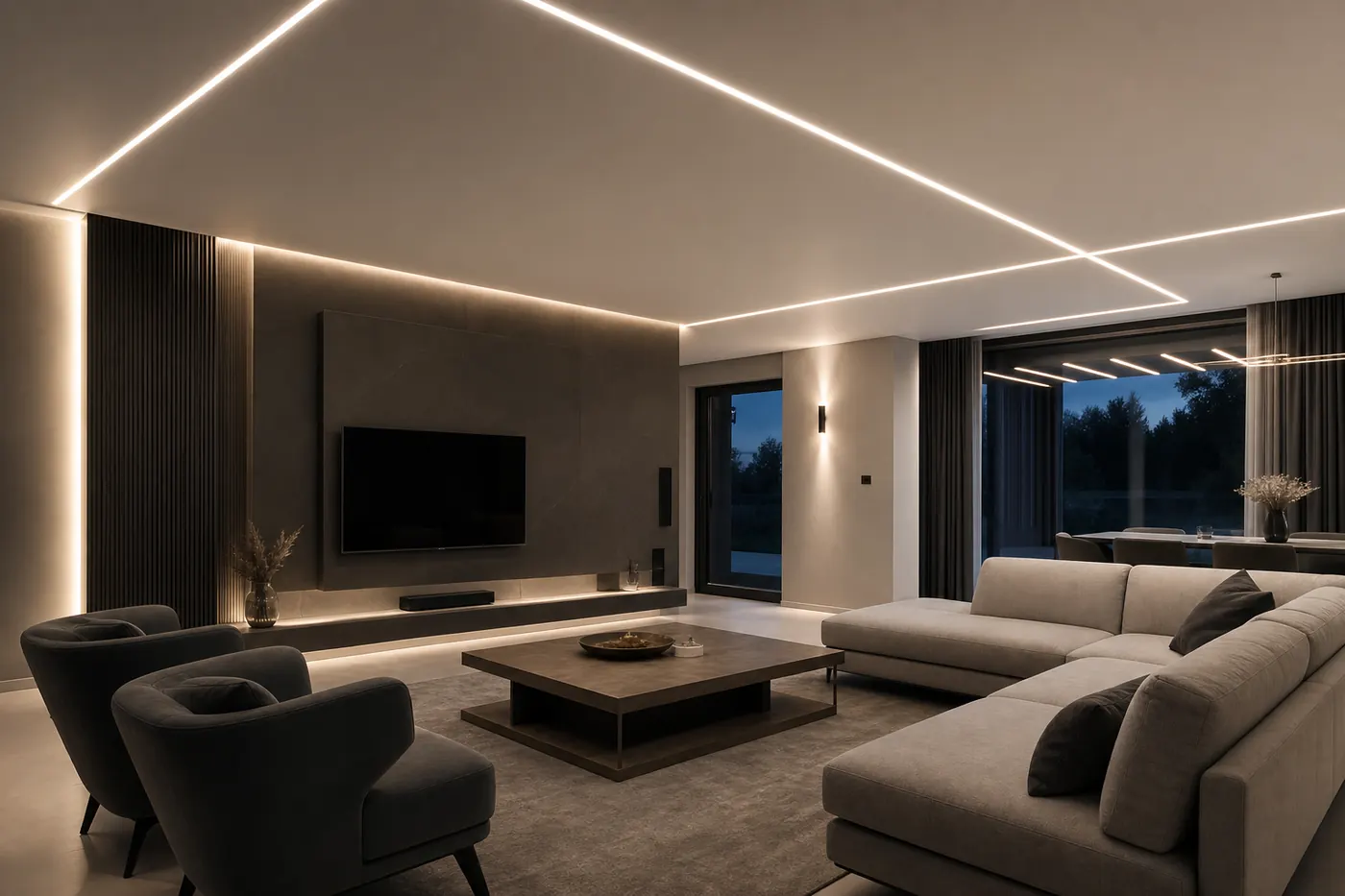
Light lines in stretch ceilings are a top interior trend for 2025–2026. Thin glowing strips instead of classic chandeliers create a floating effect and zone the space. Here’s how light lines work, what they pair with and what drives price in Tashkent.
POTOLOK+ designs and installs ceilings with light lines: odorless MSD, 15-year warranty, free measurement and custom layout quotes.
What light lines are
A light line is LED strip in aluminum profile built into drywall box or niche before PVC stretch. Film stretches flush to the diffuser — a clean glowing strip 2–8 cm wide.
Lines can run around the perimeter, cross the ceiling, frame the living zone or hallway. Color: warm white 3000K for coziness, neutral 4000K for kitchen-living, RGBW for parties and kids’ room.
Unlike LED “behind cornice”, lines read as architecture — part of the design, not background glow.
Floating effect and shadow profile
Floating ceiling with perimeter glow is a classic. Light lines amplify it — the ceiling “lifts” from walls, the room feels taller.
Shadow profile without cornice + center lines — a hit in modern Tashkent flats. No skirting — clean walls and light like a “drawing” on the ceiling.
Combo: perimeter glow (floating) + one or two lines over dining table or TV zone. At free survey POTOLOK+ sketches the scheme on your plan.
Install technology
Steps: 1) Line and electrical design. 2) Profiles and platforms on concrete ceiling. 3) LED and power supplies (hidden in niche or hatch). 4) Stretch MSD flush to diffusers. 5) Commissioning and dimmer setup.
Profile must be level — any skew shows in the glowing line. We use commercial LED with even glow, no visible diode dots.
Install is harder than a plain ceiling — for 20 m² with 6–8 m of lines allow 1–2 days instead of one.
Where to use in a flat
Living room — lines zone sofa and dining in open-plan. Hallway — guiding lines along the path. Bedroom — soft perimeter lines on dimmer instead of bright chandelier.
Kitchen — lines over island or bar; main light from spots. Kids’ room — RGB lines with remote, but white main light for homework.
In Tashkent popular for 60–90 m² new-build flats: minimal detail, maximum light.
What drives price
Factors: line length (linear meters of profile and LED), corners and joints, number of power supplies, RGB vs single color, need for drywall box below.
Tashkent guide: simple perimeter line in one room costs less than complex “geometric” pattern across the flat. Shadow profile adds cost vs basic cornice.
At free survey POTOLOK+ quotes with no hidden extras: MSD film, profile, LED, labor. 15-year warranty on film and work.
Why POTOLOK+
Light lines aren’t DIY: profile or PSU mistakes mean overheating and uneven glow. We do dozens yearly in Tashkent.
Odorless MSD, floating and shadow systems, free survey with line sketch on plan. Trusted LED suppliers.
Request a quote — we’ll show completed projects and calculate your living room or whole flat.
Frequently asked questions
01Can I do only lines without spots?
02Do lines heat the film?
03How much do light lines cost?
04Can I change RGB color from phone?
More articles
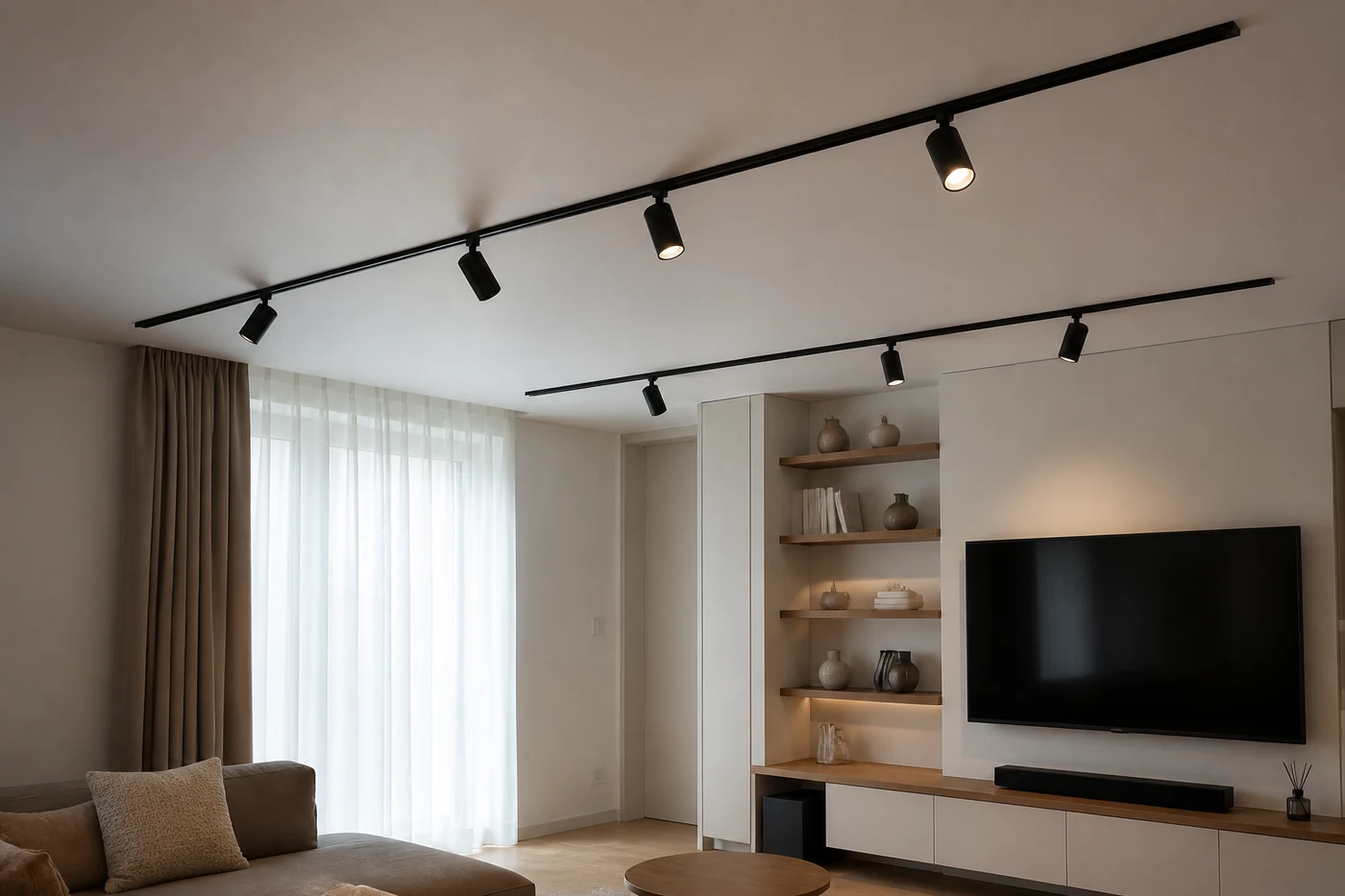
Track lighting on a stretch ceiling: rails instead of spots
POTOLOK+ extras: track lines — rails with movable fixtures, an alternative to spots. From 35 USD/m → from 420,000 UZS/m. Light lines (glowing inserts) are from 40 USD/m. Spot points are 60,000 UZS each.
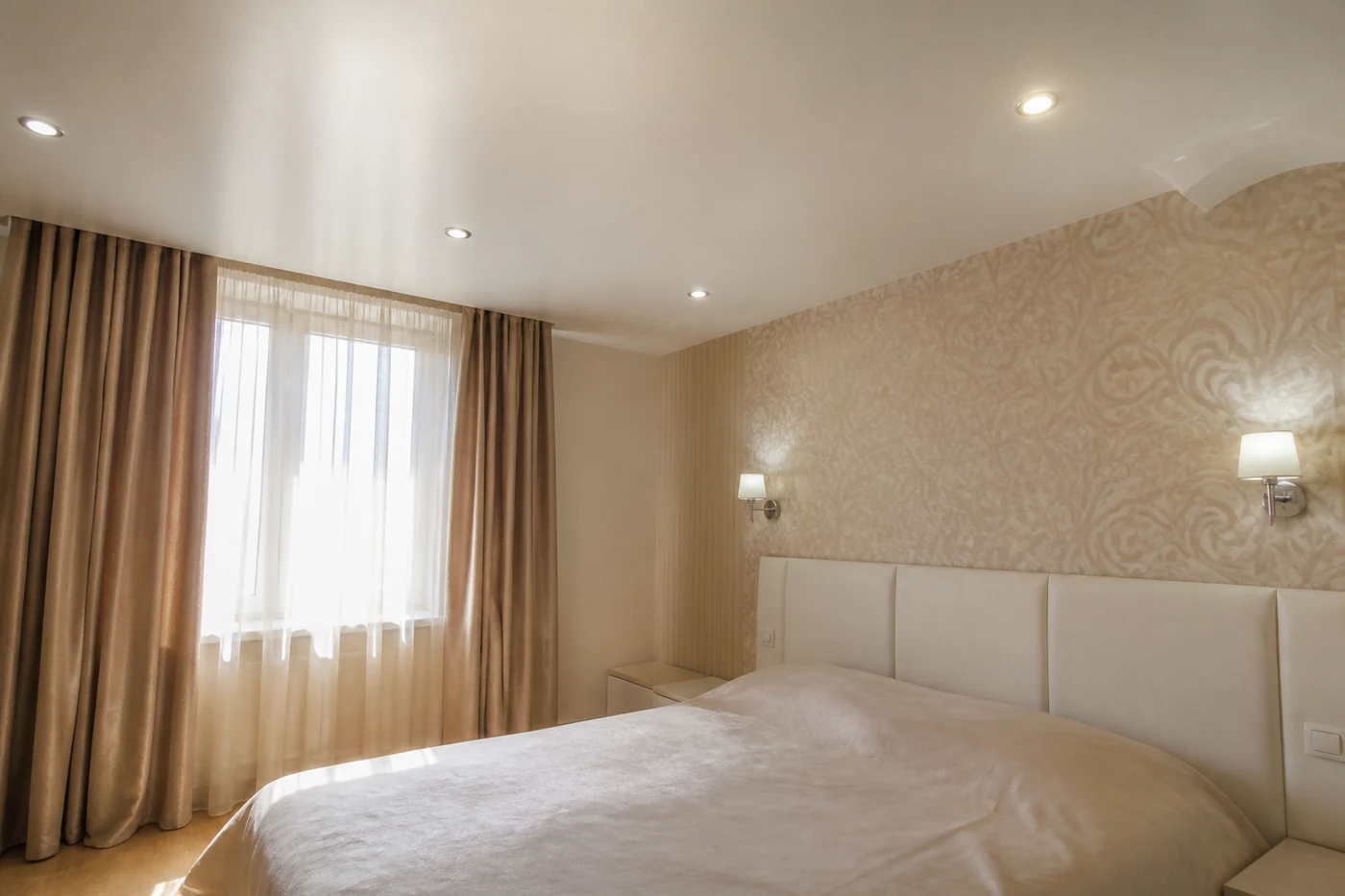
Satin stretch ceiling: pearl between matte and gloss
[Satin](/en/catalog/satinovyy/) is not a mirror. Living room, bedroom, kitchen, study. Site price: from 8 USD/m². Card FAQ: 15–20% above matte. Final number after measure.
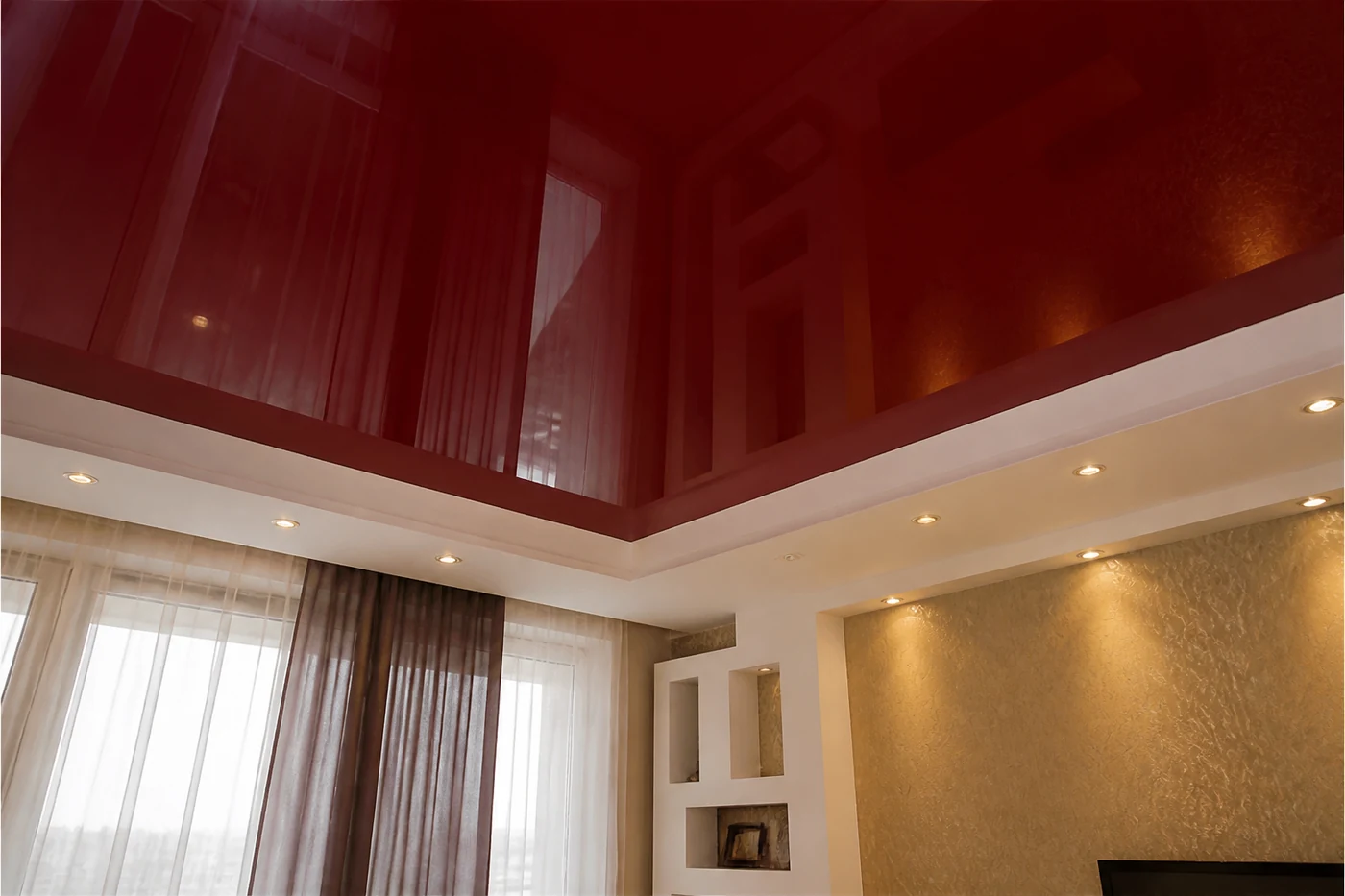
Glossy stretch ceiling: mirror, seam and wet rooms
[Gloss](/en/catalog/glyantsevyy/) is a lacquer surface. Visual expansion up to +30%. Price: from 8 USD/m². Three textures: [matte, gloss or satin](/en/blog/matovyy-glyancevyy-satinovyy-chto-vybrat/).